
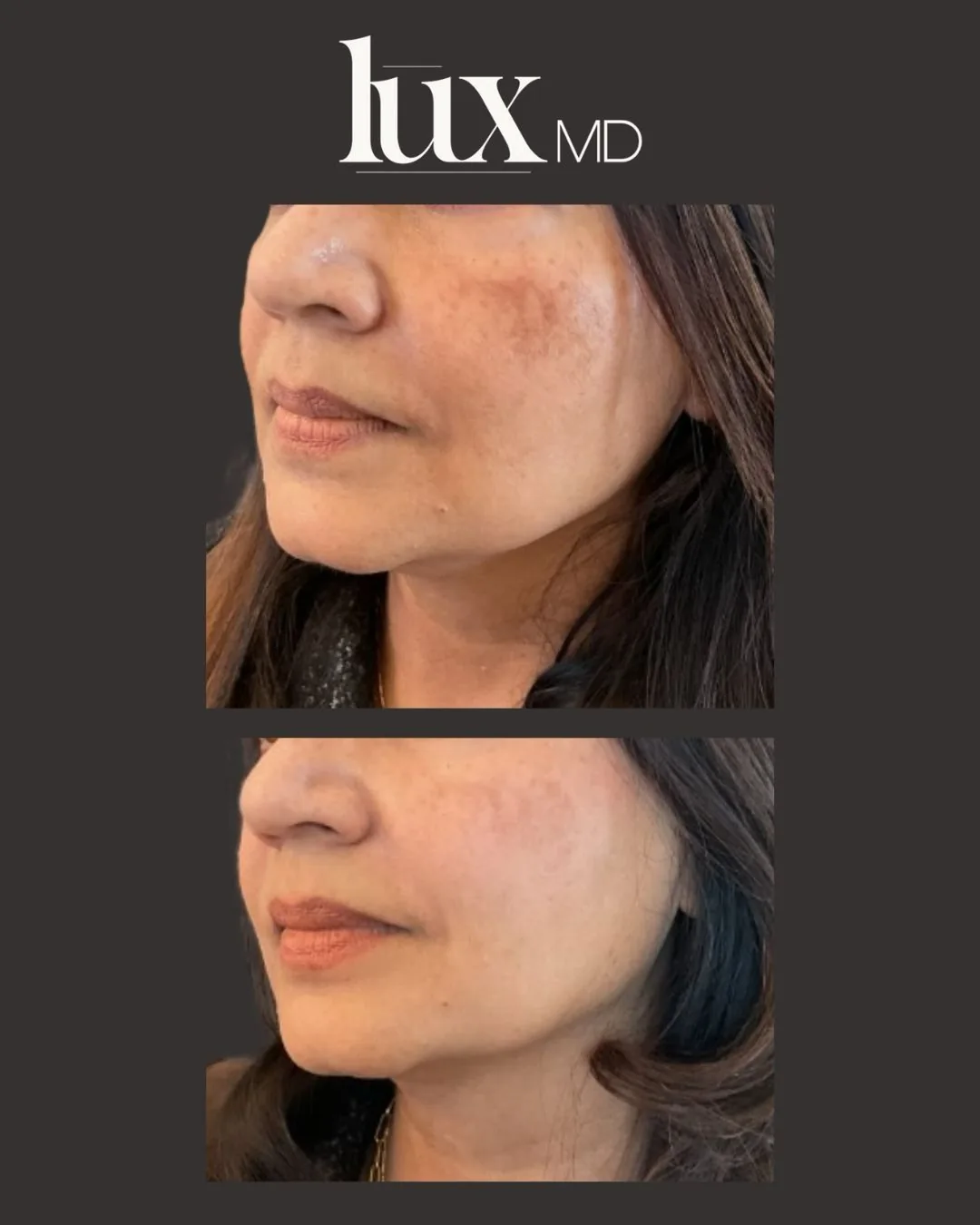
During a chemical peel, an acid solution is brushed onto clean skin, and you feel tingling, warmth or a mild sting until it's neutralized or removed. Afterward, skin looks pink and feels tight, then flakes or peels as the old layer sheds. Once it's gone, skin looks brighter and more even. Individual results vary.
What is a chemical peel?
A chemical peel uses an acid solution to loosen the bonds that hold dead and damaged cells to the surface of your skin. Over the next days, those cells shed, and the smoother, more even skin underneath takes their place. Stronger peels reach a little deeper and also prompt new collagen, which helps with fine lines and shallow scars.
The photo above shows a patient at LūxMD before and after a series of four peels, with brown patches across the cheek visibly lighter. Individual results vary.
What happens before the peel?
It starts with a consultation. We look at your skin and ask about your medications, past peels and how your skin reacts to the sun. Then we pick the strength:
- Light peels for dullness, rough texture, mild discoloration and clogged pores.
- Medium peels for sun spots, moderate lines and shallow acne scars.
- Deeper peels for advanced sun damage and deeper lines, with a longer recovery planned in advance.
Some people are asked to prepare their skin at home for a few weeks before a stronger peel.
What happens during the peel?
- Cleansing. Your skin is cleaned thoroughly to remove oil and makeup, so the peel works evenly.
- Application. The solution goes on in layers. Common peeling agents include glycolic acid, salicylic acid and trichloroacetic acid (TCA), chosen for your skin and goal.
- What you feel. Tingling, warmth or a mild sting. Light peels are the most comfortable. Stronger peels feel more intense, and your provider times each layer to keep you comfortable.
- Finishing. The peel is neutralized or removed, depending on the type, and a soothing product and sunscreen go on.
How does your skin look right after?
Pink and a little warm, rather like a mild sunburn. It may feel tight. After a stronger peel, some swelling is possible. You'll leave with written aftercare for the peel you had.
What happens in the days after?
Your skin starts to flake or peel as the treated layer sheds. How much depends on the strength: a light peel may bring only light flaking, while medium and deeper peels cause visible peeling over several days. We give you the expected timeline for your peel before you start.
Let the skin shed on its own. Picking can leave marks. For the full list of what to use and what to skip, read our post-peel dos and don'ts.
When do you see results?
Once the old layer is gone, your skin looks brighter and more even, and it keeps improving over the following weeks. Lighter peels are often done as a series. Stronger peels are repeated less often, because the skin needs longer to recover. Individual results vary.
What can a chemical peel treat?
Peels work on the top layers of the skin, which is where most visible problems live:
- brown spots and uneven tone from sun damage
- shallow acne scars and the marks breakouts leave behind
- fine lines, especially around the eyes and mouth
- dull, rough skin
Deep, pitted scars usually need a treatment that reaches further, such as microneedling, CoolPeel or DEKA CO2 resurfacing.
Who performs chemical peels at LūxMD?
Our licensed clinical team, under the medical direction of Dr. Zach Wagner, DO. He sets the protocols for every peel strength the clinic offers. Read more about chemical peels at LūxMD.
Ready to choose your peel?
New patients get a free first appointment at our clinic at 2602 Old First Street in Livermore.
Book your free first appointment or call 925-371-9984.