
Platelet-rich plasma and growth factors
PRP and PDGF injections in Livermore
PRP injections use platelet-rich plasma, a concentrate made from a small sample of your own blood, to support skin quality. PDGF injections use platelet-derived growth factors, often for tired, hollow-looking under-eyes. At LūxMD in downtown Livermore, both are given under the medical direction of Dr. Zach Wagner, DO. New patients start with a free first appointment.
- 4.8 on Google from 136 reviews
- Medical director: Dr. Zach Wagner, DO
- When results show
- Gradually, over weeks to months, not on the day.
- Cost
- Set at your consultation. No prices are published.
What it treats
What PRP and PDGF injections treat
PRP for the skin
- Dull, tired-looking skin
- Uneven texture and fine lines
- Skin quality on the face, neck and hands
PDGF for the under-eyes
- Hollowness under the eyes
- Dark shadows
- Thin, crepey under-eye skin
Changes are gradual and subtle rather than dramatic. Individual results vary.
PRP is also used for thinning hair, which has its own page: PRP hair restoration. Microneedling can be paired with PRP too.
How it works
How PRP works
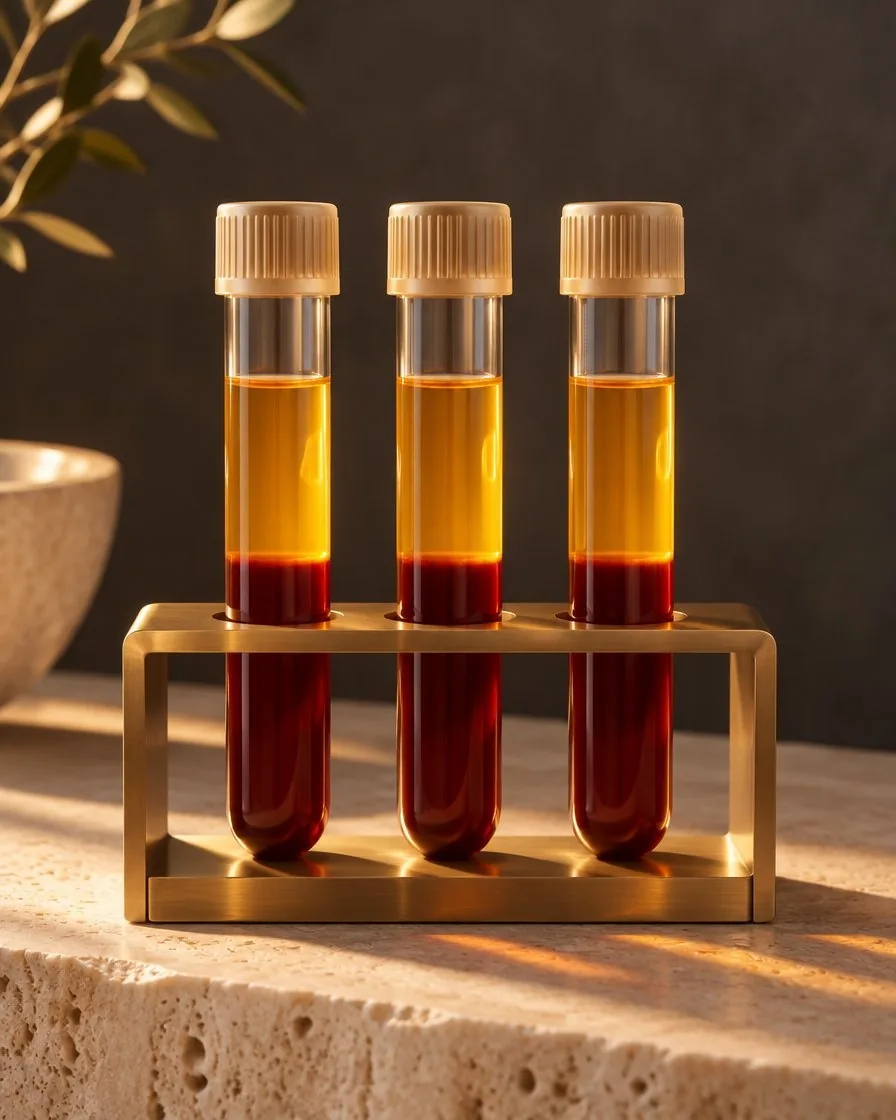
Platelets are the cells in your blood that help wounds heal. They carry proteins called growth factors.
- A small sample of blood is drawn from your arm.
- It spins in a centrifuge, which separates the platelet-rich plasma from the red and white blood cells.
- The concentrated plasma is injected into the treatment area, where its growth factors support the skin's own repair and collagen production.
Because PRP comes from your own blood, the risk of an allergic reaction to it is low. It is not right for everyone, though. Some blood disorders, active infections and other conditions rule it out, which your consultation covers.
How it works
How PDGF works
PDGF stands for platelet-derived growth factors, the signalling proteins platelets release to start tissue repair. A PDGF treatment uses a purified growth-factor preparation rather than whole platelet-rich plasma.
Under the eyes, PDGF is placed to support the skin's own collagen rather than to add volume with a gel. That makes it an option for people who don't want hyaluronic acid filler in that delicate area. Results build gradually. Individual results vary.
Your appointment
What to expect
- Consultation. Your injector reviews your health history and your goals and confirms which treatment fits.
- Preparation. For PRP, blood is drawn and spun while the skin is cleaned and numbed.
- Injections. Small amounts are placed with a fine needle or a cannula.
- Right after. Redness, swelling and bruising at the injection points are possible and usually settle within days.
- Aftercare. Your injector will give you written instructions. Anti-inflammatory painkillers are often avoided after PRP because they may blunt the healing response.
Medical director
Dr. Zach Wagner, DO
Medical Director, LūxMD
- Doctor of Osteopathic Medicine (DO), Rocky Vista University
- Family medicine residency, Travis Air Force Base
- Diplomate, American Board of Obesity Medicine
- Former U.S. Air Force flight surgeon
Who performs it
Who performs your PRP or PDGF treatment
Injections at LūxMD are given by a registered nurse injector. Every treatment is under the medical direction of Dr. Zach Wagner, DO, a family medicine physician who is board-certified in obesity medicine and a former U.S. Air Force flight surgeon.
Cost
What changes the cost of PRP and PDGF
We don't publish prices. The cost depends on which treatment you choose, the area and how many sessions your plan needs. The exact plan and cost come at your consultation. New patients get a free first appointment. CareCredit and Cherry financing are available.
Three options for tired skin
PRP, PDGF and under-eye filler compared
Your injector will recommend the right option for your skin and goals at your consultation.
| Compared | PRP | PDGF | Hyaluronic acid filler |
|---|---|---|---|
| What it is | Concentrated plasma from your own blood | Purified platelet-derived growth factors | A cross-linked hyaluronic acid gel |
| How it works | Growth factors support skin repair and collagen | Growth factors support collagen in a targeted area | Adds volume directly |
| When you see it | Gradually | Gradually | On the day |
Concerns
Concerns PRP and PDGF can help with
- Tired-looking under-eyes. Hollows and shadows that make you look short on sleep.
- Dull skin. Skin that has lost its glow and texture.
- Crepey skin. Thin, finely wrinkled skin, often under the eyes.
Also consider
- Microneedling, with a PRP option
- PRP hair restoration
- Dermal fillers
- All injectables
Questions
PRP and PDGF questions, answered
What are PRP injections?
PRP injections use platelet-rich plasma, a concentrate made by spinning a small sample of your own blood in a centrifuge. The plasma carries growth factors that support the skin's own repair and collagen production. At LūxMD in Livermore, PRP is given under the medical direction of Dr. Zach Wagner, DO. Individual results vary.
What is the difference between PRP and PDGF?
PRP is concentrated plasma made from your own blood, containing platelets and the growth factors they carry. PDGF is a purified preparation of platelet-derived growth factors, used in targeted areas such as under the eyes. Both work gradually by supporting your skin's own repair. Your injector at LūxMD will explain which suits your goals.
Is PDGF a filler?
No. PDGF is not a filler. A hyaluronic acid filler adds volume on the day. PDGF uses growth factors to support the skin's own collagen, so changes appear gradually. Some people choose it for the under-eyes because they would rather not have filler in that area. Your injector at LūxMD will talk through both options.
Do PRP injections hurt?
PRP involves a blood draw and a series of small injections. Most people find it manageable, and numbing options are discussed at your consultation. Your injector at LūxMD will explain each step before starting and check in with you during treatment.
How much do PRP injections cost in Livermore?
At LūxMD, the cost of PRP or PDGF injections depends on the treatment, the area and how many sessions your plan needs. We don't publish prices. Your injector gives you the exact plan and cost at your consultation. New patients get a free first appointment, and CareCredit and Cherry financing are available.
Who should not have PRP injections?
PRP is not right for everyone. Some blood disorders, active infections and other medical conditions can rule it out, and certain medicines may need to be discussed first. At LūxMD, your injector reviews your health history at your consultation under the medical direction of Dr. Zach Wagner, DO, before recommending treatment.
Keep exploring
Related treatments
Performed at the studio in Livermore, for clients across Livermore, Dublin, Pleasanton and San Ramon.
Book your PRP or PDGF consultation in Livermore
LūxMD, 2602 Old First Street, Livermore, CA 94550.
Tuesday to Friday 9:00 am to 5:00 pm, Saturday 9:00 am to 2:00 pm, closed Sunday and Monday.