
Light, medium and deeper peels
Chemical peels in Livermore
A chemical peel is an acid solution applied to the skin to dissolve the dull outer layer, so fresher, more even skin can grow through. At LūxMD in Livermore, our licensed clinical team chooses the peel strength for your skin and goals, under the medical direction of Dr. Zach Wagner, DO.
- 4.8 on Google from 136 reviews
- Medical director: Dr. Zach Wagner, DO

- Who performs it
- Our licensed clinical team, under the medical direction of Dr. Zach Wagner, DO.
- Strengths
- Light, medium and deeper peels, chosen for your skin type and goal.
- Downtime
- Depends on the strength. Light peels mean some redness and flaking; stronger peels mean more visible peeling.
- When results show
- After the peeling finishes, and they keep improving over the following weeks.
- Sessions
- Lighter peels are often done as a series; stronger peels less often.
- Cost
- Set at your consultation. No prices are published.
What it treats
What a chemical peel treats
A peel works on the top layers of the skin, which is where most of the problems you can see live. That makes it a good fit for:
- Brown spots, sun damage and uneven tone. See sun damage and age spots
- Shallow acne scars and marks left after breakouts. See acne scars
- Fine lines, especially around the eyes and mouth
- Rough, dry patches and skin that looks dull
- Clogged pores on acne-prone skin
Peels are a common choice for melasma and other stubborn pigment too, though those need a careful plan and steady sun protection. Individual results vary.
How it works
How a chemical peel works
The solution loosens the bonds that hold dead and damaged cells to the surface. Over the next days those cells shed, and the skin underneath, which is smoother and more even in colour, takes their place. Stronger peels reach a little deeper and also prompt the skin to make new collagen, which helps with fine lines and shallow scars.
The strength of the peel decides how deep it works and how much you peel afterward.
| Strength | What it is for | What recovery looks like |
|---|---|---|
| Light | Dullness, rough texture, mild discoloration, clogged pores | Mild redness and light flaking |
| Medium | Sun spots, moderate lines, shallow acne scars | Visible peeling and more redness |
| Deeper | Advanced sun damage and deeper lines | A longer recovery, planned in advance |
Common peeling agents include glycolic acid, salicylic acid and trichloroacetic acid (TCA).
Your appointment
What to expect
- Consultation. We look at your skin, ask about medications, past peels and how your skin reacts to the sun, and pick the peel. Some people are asked to prepare their skin at home for a few weeks first.
- Cleansing. Your skin is cleaned thoroughly to remove oil and makeup, so the peel works evenly.
- Application. The solution goes on in layers. You may feel tingling, warmth or a mild sting. Stronger peels feel more intense.
- Finishing. The peel is neutralised or removed, depending on the type, and a soothing product and sunscreen are applied.
- The next days. Your skin may look pink and feel tight, then begin to flake or peel. Let it shed on its own. Picking can cause marks.
- Results. Once the old layer is gone, skin looks brighter and more even, and keeps improving over the following weeks. Individual results vary.
Aftercare
Aftercare that protects your result
- Moisturise often with a gentle, unscented moisturiser.
- Wear broad-spectrum sunscreen every day, indoors too, and a hat when you are outside.
- Skip scrubs, retinol and exfoliating acids until your provider says you can restart them.
- Avoid saunas, hot showers and hard workouts in the first days, because heat inflames healing skin.
- Never pull off peeling skin.
Your aftercare sheet gives the timings for your specific peel.
Candidacy
Is a chemical peel right for you?
You are likely a good candidate if you:
- Have sun spots, uneven tone or dull skin you'd like to brighten
- Have shallow acne scars or marks from old breakouts
- Want a refresh you can repeat as part of a routine
- Can keep your skin out of the sun while it heals
A peel may not be right for you during an active skin infection, a cold sore outbreak or while your skin is very irritated. Certain medications and medical conditions also call for a different plan. We'll go through all of this at your consultation.
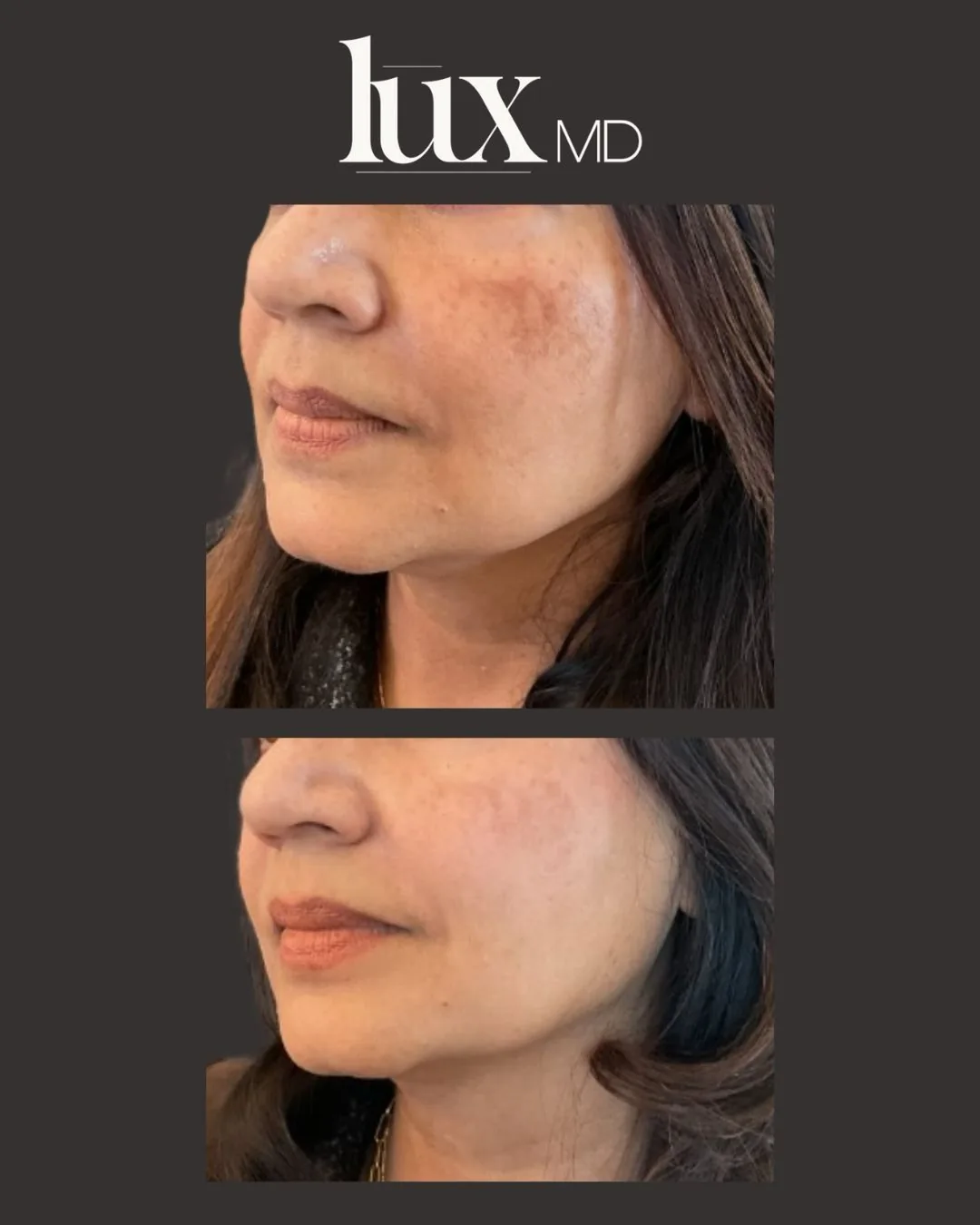
Before and after
Results at
A patient with brown patches across the cheek, before and after a series of four chemical peels. The patches are visibly lighter and the skin tone is more even.
Acid or laser
Chemical peel or CoolPeel?
Both treat tone and texture. The difference is the tool: one uses an acid, the other a laser.
| Compared | Chemical peel | CoolPeel |
|---|---|---|
| How it works | An acid solution dissolves the outer layer | A CO2 laser treats the skin in a fine pattern |
| Main targets | Uneven tone, brown spots, dullness, shallow scars | Texture, tone, pores and fine lines |
| Strength options | Light, medium and deeper peels | Settings adjusted by the provider |
| Device | None | CoolPeel, on site |
For deeper lines and scars, full DEKA CO2 resurfacing goes further than either. See CoolPeel.
Medical director
Dr. Zach Wagner, DO
Medical Director, LūxMD
- Doctor of Osteopathic Medicine (DO), Rocky Vista University
- Family medicine residency, Travis Air Force Base
- Diplomate, American Board of Obesity Medicine
- Former U.S. Air Force flight surgeon
Your care team
Who treats you
Chemical peels at LūxMD are performed by our licensed clinical team, under the medical direction of Dr. Zach Wagner, DO. Dr. Wagner is a family medicine physician, board-certified in obesity medicine, and a former U.S. Air Force flight surgeon. He sets the protocols for every peel strength the clinic offers.
Cost
What affects the cost
The cost of a chemical peel depends on:
- The strength of the peel
- The area: face only, or neck, chest or hands as well
- Whether you need a series or a single treatment
- Any home skin care recommended before or after
We give you the exact plan and cost at your consultation. New patients get a free first appointment. To spread the cost, we offer CareCredit and Cherry.
FinancingConcerns
Concerns chemical peels answer
Questions
Chemical peel questions, answered
How much does a chemical peel cost in Livermore?
LūxMD doesn't publish a set price for chemical peels, because the cost depends on the peel strength, the area treated and whether you need a series. You get the exact plan and cost at your consultation, before anything is booked. New patients get a free first appointment, and CareCredit and Cherry financing are available.
Does a chemical peel hurt?
Most chemical peels cause tingling, warmth or a mild sting while the solution is on the skin. Light peels are the most comfortable. Medium and deeper peels feel more intense, and your provider uses cooling and timing to keep you comfortable. Afterward the skin can feel tight and sensitive, similar to a mild sunburn, while it heals.
How long does peeling last after a chemical peel?
How long you peel after a chemical peel depends on its strength. Light peels may cause only light flaking, while medium and deeper peels cause visible peeling over several days. Keep the skin moisturised, protect it from the sun and let it shed on its own. Your provider gives you the expected timeline for your specific peel.
Can a chemical peel remove sun spots?
A chemical peel can lighten many sun spots and even out blotchy tone by shedding the pigmented surface cells. Several peels are often needed, and daily sunscreen is what keeps spots from returning. Deeper or stubborn spots may respond better to IPL or a laser such as CoolPeel. Any new or changing spot should be checked by a doctor first. Individual results vary.
Do chemical peels help acne scars?
Chemical peels can soften shallow acne scars and fade the brown or red marks breakouts leave behind. Deep, pitted scars usually need a treatment that reaches further, such as microneedling, Morpheus8, CoolPeel or DEKA CO2 resurfacing. Many people see the most change from a combination. Your provider looks at your scar type before recommending a plan. Individual results vary.
How often can I get a chemical peel?
How often you can repeat a chemical peel depends on its strength. Lighter peels are often done as a series a few weeks apart, while medium and deeper peels are spaced much further apart so the skin can fully recover. Your provider sets the schedule at your consultation based on your skin and your goal.
Where can I get a chemical peel near Pleasanton?
LūxMD is at 2602 Old First Street in downtown Livermore, and patients come from Pleasanton by Stanley Boulevard or I-580. We are open Tuesday to Friday 9:00 am to 5:00 pm and Saturday 9:00 am to 2:00 pm, closed Sunday and Monday. New patients get a free first appointment to choose the right peel.
Keep exploring
Related treatments
Explore Facial and skin treatments Read: December Glow Guide: HydraFacial Tips for Winter Skin Read: What to Expect During and After a Chemical Peel Read: Post-Peel Skincare: Dos and Don'ts for Recovery
Performed at the studio in Livermore, for clients across Livermore, Dublin, Pleasanton and San Ramon.
Choose your peel with us
Tell us what you'd like to fade or brighten, and we'll match the peel strength to your skin.
LūxMD, 2602 Old First Street, Livermore, CA 94550.
Tuesday to Friday 9:00 am to 5:00 pm, Saturday 9:00 am to 2:00 pm, closed Sunday and Monday.